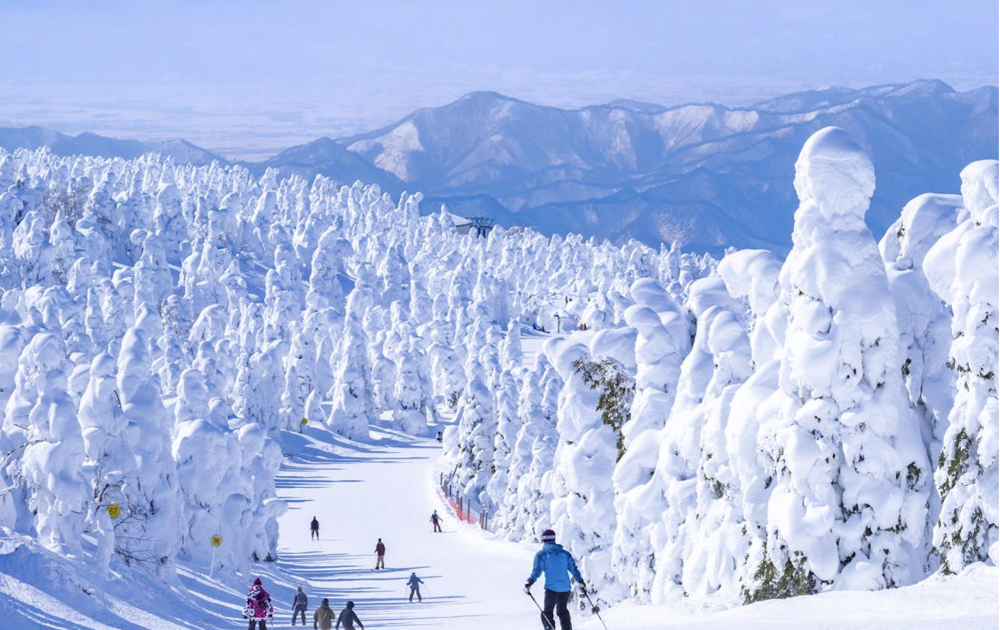
Winter in Japan is defined by the purity of snow, the silence of landscapes, and the contrast between alpine energy and thermal stillness. It is a season where travel becomes more elemental, shaped by environment rather than movement.
For UHNW travelers, winter in Japan represents one of the most exclusive expressions of luxury travel. From Niseko’s world-renowned powder snow to private onsen retreats hidden in mountainous regions, the experience is defined by precision, privacy, and access.
A carefully designed winter journey in Japan is not about activity volume. It is about selecting the right landscapes, the right timing, and the right level of exclusivity.
Niseko: Understanding Japan’s Most Famous Snow
Niseko, on the northern island of Hokkaido, has built its reputation on one thing above all: the quality of its snow. The region receives an average of around 14 meters of snowfall each season, driven by cold Siberian storm systems that cross the Sea of Japan and drop consistently dry, light powder rather than the heavier, wetter snow found in many other parts of the world.
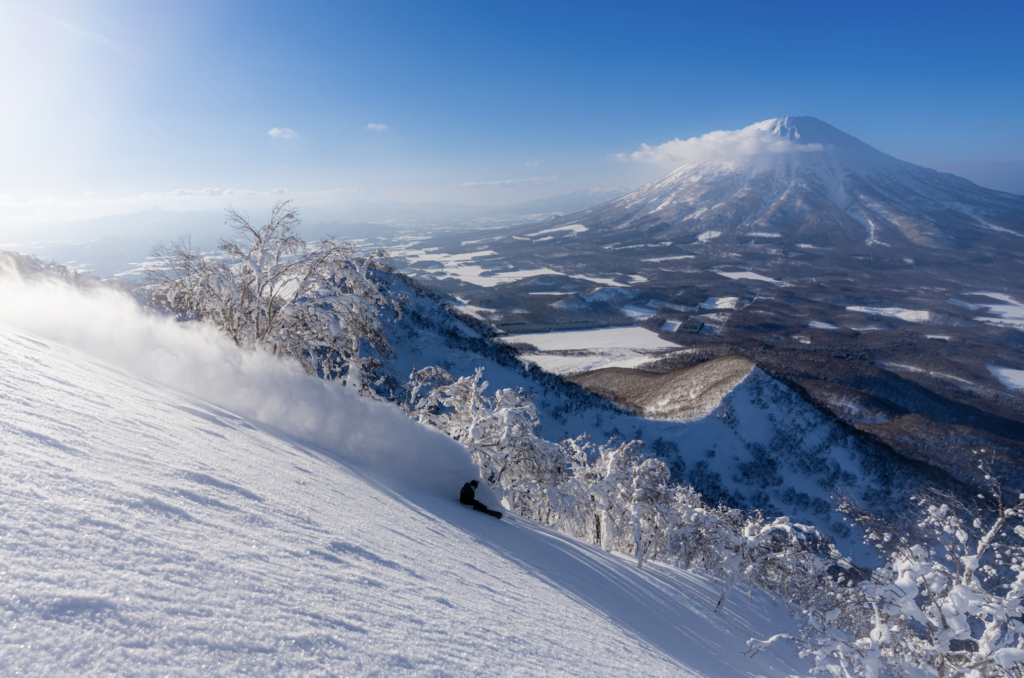
The season typically runs from late November or early December through to early May, one of the longest in the country. January is generally considered the peak month, when temperatures regularly fall below minus ten degrees Celsius, and storm cycles deliver the deepest, driest powder of the winter. February tends to bring more stable weather alongside continued heavy snowfall, while March has become something of an insider’s month, favored by travelers who want excellent conditions with noticeably fewer crowds than the December and January holiday period.
Niseko sits roughly two to three hours by road or shuttle from New Chitose Airport near Sapporo. The resort area is spread across several villages, including Hirafu, which offers the most direct lift access and the liveliest atmosphere, and Annupuri and Hanazono, both quieter and closer to the mountain’s forested backcountry.
Night skiing is another distinct feature of Niseko, running from mid-December through to late March across a large section of the mountain, with lit runs against a dark, snow-heavy sky. For travelers who want to experience Japan’s powder without the daytime crowds, an evening on the slopes offers a genuinely different atmosphere from the same terrain in daylight.
Private Onsen: A Different Kind of Winter Experience
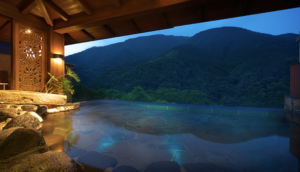
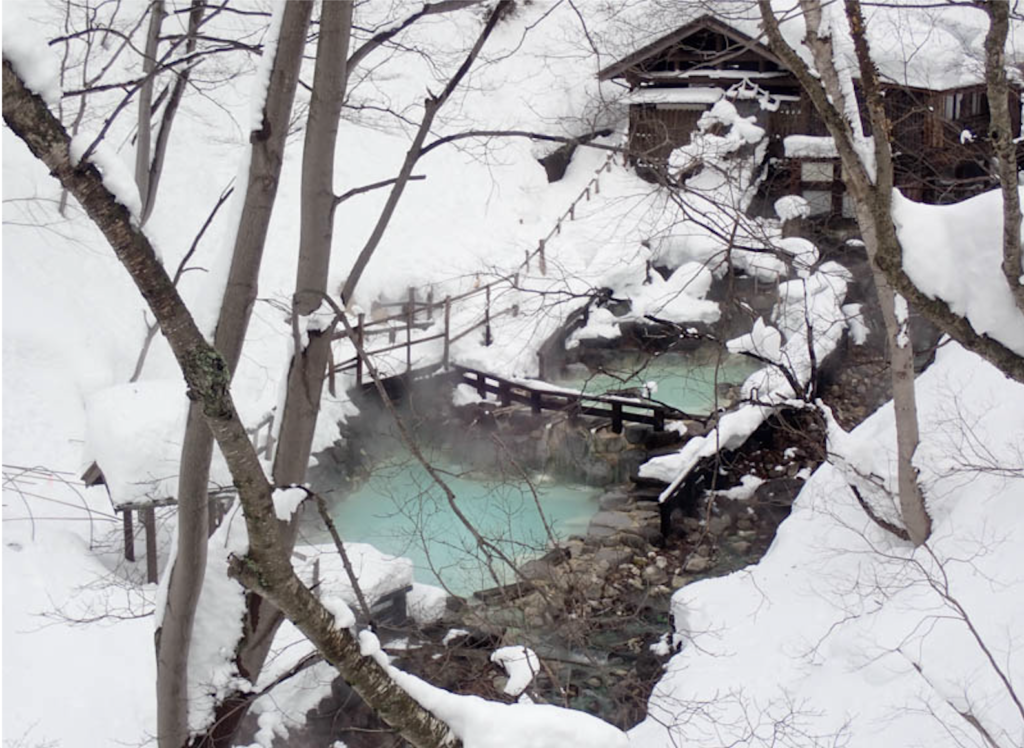
Where Niseko’s skiing is about energy and motion, Japan’s onsen tradition offers the opposite. An onsen is a hot spring bath, often fed directly from a natural volcanic source, and soaking in one after a day in the snow is one of the oldest and most established winter rituals in the country.
A small number of properties combine both experiences directly. Zaborin, a ryokan hidden in the birch forests of Hanazono near Niseko, holds only fifteen villas, each with two private onsen baths of its own, one indoors and one on an open-air terrace, both filled with free-flowing natural spring water drawn from the property’s own source, a method known in Japan as gensen kakenagashi. The villas look out toward Mount Yotei, a volcanic peak often compared to Mount Fuji for its symmetrical shape, and dinner is served as a multi-course kaiseki meal built around Hokkaido’s own seafood, vegetables, and dairy.
This kind of stay illustrates a broader point about winter travel in Japan: the accommodation is not simply a place to sleep between days on the mountain. At a property like this, the onsen, the meal, and the quiet of the surrounding forest are as much a part of the winter experience as the skiing itself. Zaborin sits only a short drive from Niseko’s Hanazono ski area, close enough that a morning on the mountain and an evening soaking in an outdoor bath, snow settling on the surrounding trees, can both fit naturally into the same day.
Beyond Niseko: Other Winter Landscapes Worth Considering
While Niseko draws the most international attention, it is not the only winter landscape worth including in a private journey through Japan. Hakuba, in the Nagano mountains on the main island of Honshu, offers steeper terrain and a different alpine character, closer to Tokyo and set among some of Japan’s most dramatic peaks. Zao Onsen, in the Tohoku region, is known for its juhyo, or snow monsters, a phenomenon in which wind and freezing fog coat entire trees in thick layers of rime ice, creating a landscape unlike anywhere else in the country.
A journey that includes more than one of these regions can offer real contrast within a single winter trip: the deep, reliable powder of Niseko, followed by the quieter, more otherworldly scenery of a region like Zao, each visited for long enough to actually settle into its particular rhythm rather than passed through quickly.
Why Timing Shapes a Winter Journey More Than Most Other Seasons
Winter in Japan rewards precise timing in a way that few other seasons do. The difference between a trip in mid-December, when the snow base is still developing, and one in mid-January, when storm cycles are delivering the season’s deepest powder, can be significant. Properties like Zaborin, with only fifteen rooms, are booked well in advance for the peak weeks around the New Year holiday and through February, when demand from both Japanese and international travelers is highest.
A well-designed winter journey accounts for this by weighing the trade-offs directly. Late December and the New Year period bring a festive atmosphere and reliably good snow, but also the year’s busiest crowds and highest rates. Late January and February offer some of the most consistent powder conditions of the season. March, meanwhile, tends to deliver a quieter, more spacious version of the same mountain, with a deep snow base still largely intact and considerably shorter lift lines.
Designing the Journey Around Precision, Not Volume
A private winter journey through Japan is rarely about fitting in as many activities as possible. Days on the mountain are naturally limited by daylight, weather, and simple physical energy, and the most memorable parts of a winter trip often happen off the slopes entirely: an evening soak in an outdoor onsen with snow falling around the edges of the bath, a quiet kaiseki dinner after a long day, or an unhurried morning with no fixed departure time.
For a family traveling together, this pace matters even more. Children and confident skiers may want full days on the mountain, while other members of the group may prefer a shorter morning followed by an afternoon at the onsen. A well-planned itinerary builds this variation in from the start, rather than keeping everyone on a single fixed schedule built for the most active member of the group.
Muslim travelers, including those from the GCC, often plan around specific needs during a winter trip as well, from halal dining arranged in advance at a ski resort where options may be limited, to private onsen access, which by its nature already accommodates a privacy preference that some travelers are specifically seeking.
What a Private Winter Journey Through Japan Might Look Like
A well-timed winter journey might begin with several days in Niseko during a period chosen specifically for snow quality, staying at a property that pairs skiing with a genuine onsen experience rather than treating the bath as an afterthought. From there, the journey might continue to a quieter region such as Zao or Hakuba, offering a different landscape and a slower pace before the trip ends.
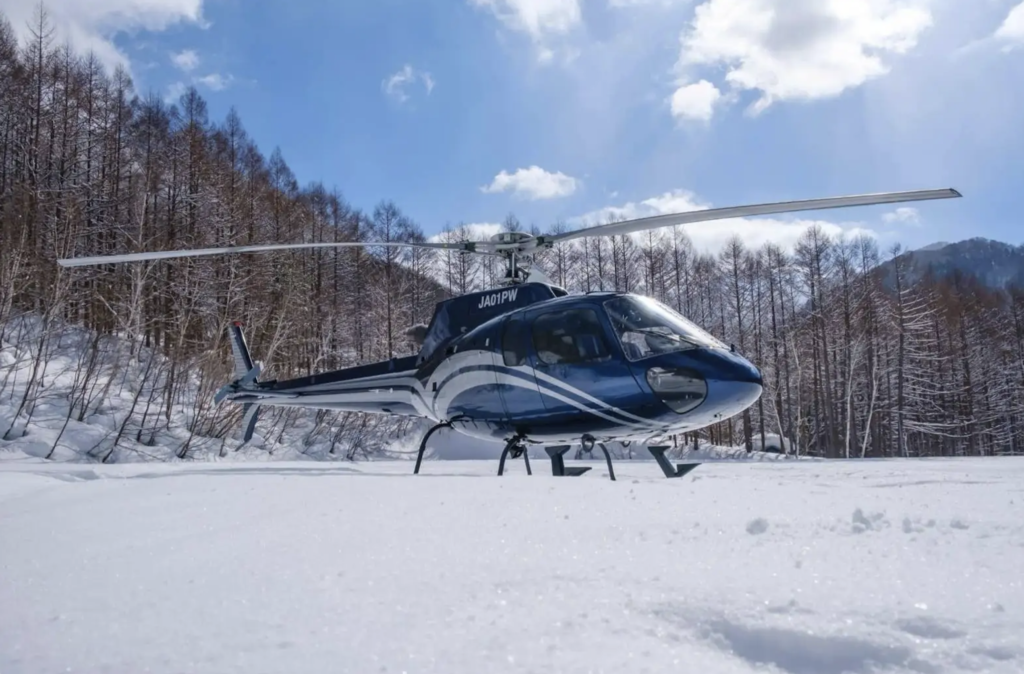
Throughout, private guides familiar with current snow and avalanche conditions add real value beyond simple convenience, since backcountry and off-piste terrain in Japan can change quickly with each new storm. A guide who tracks these conditions daily can help a traveler find the best snow of a given day, rather than skiing the same groomed runs as everyone else.
What This Looks Like With Asatsuyu
Winter is a season where the calendar does the deciding for us more than in almost any other part of the year. We watch Niseko’s storm cycles as January approaches; we know which weeks at a property like Zaborin fill first, and we build a client’s dates around when the snow is actually expected to be at its best, not simply around when it’s convenient to travel.
Because we take on a limited number of winter journeys each season, we can hold a client’s preferred dates against a small handful of properties and confirm early, rather than scrambling once the season’s best rooms are already gone. If a winter journey through Japan is something you’re considering, reaching out well before the season begins gives us the most room to build it around exactly the balance of skiing, stillness, and privacy you’re looking for.
FAQ
What months are winter in Japan?
Winter in Japan generally runs from December through February, though the feel of the season varies sharply by region. In Hokkaido, snow can begin falling as early as late November, while in Tokyo and further south, winter arrives more gradually and rarely brings heavy snowfall to the cities themselves.
What is Japan’s coldest month?
January is typically the coldest month across most of the country. In Hokkaido, including the Niseko region, temperatures regularly drop below minus ten degrees Celsius during this period — conditions that also produce the driest, most sought-after powder snow of the season.
How cold is Japan in winter?
It depends heavily on where you are. Hokkaido and the northern mountains see genuinely cold, snow-heavy winters, while Tokyo and Kyoto are milder, with daytime temperatures often still above freezing even in January. This range is part of what makes a well-planned winter journey worth designing carefully — the experience in the north and the south can feel like two different seasons entirely.
Is it worth visiting Japan in winter?
For travelers drawn to snow landscapes, hot spring culture, or simply a quieter version of the country, winter is often considered one of the most rewarding seasons to visit. Fewer international travelers come during this period compared to spring or autumn, which means popular sites, ryokan, and even some ski regions feel noticeably less crowded outside the December and New Year holiday peak.
What is the prettiest time to go to Japan?
This depends on what a traveler wants to see, since Japan offers several strong contenders across the year — spring’s cherry blossoms, autumn’s koyo foliage, and winter’s snow-covered landscapes each offer a distinct kind of beauty. Winter’s appeal is quieter and less photographed than spring or autumn, built around stillness and contrast, such as snow settling on a temple roof or steam rising from an outdoor onsen.