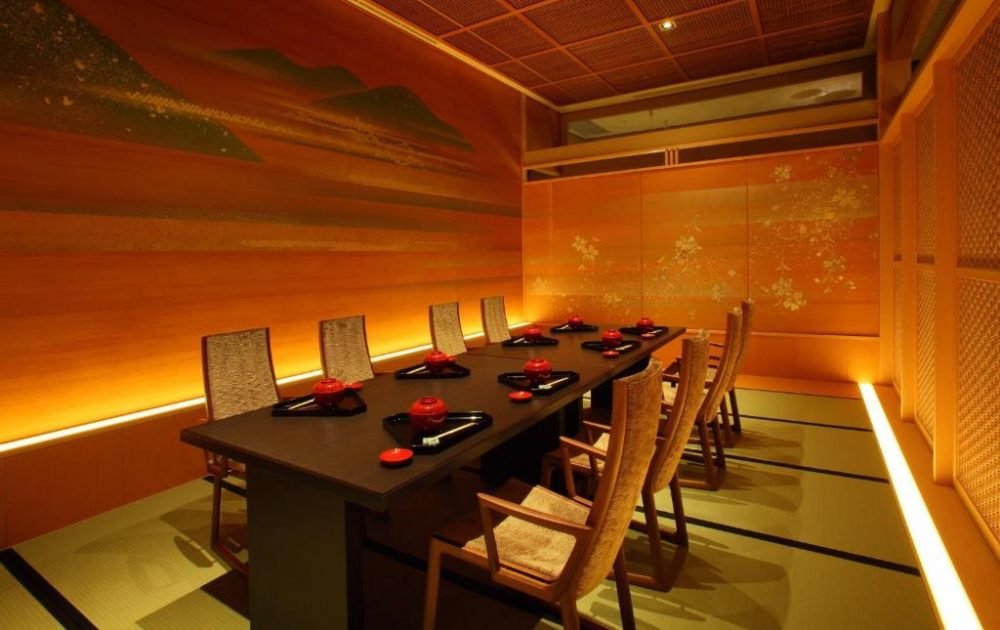
Fine dining in Japan is defined by more than cuisine. It is defined by context, timing, and respect for craft. For discerning travelers, the experience is less about formality and more about understanding how restraint, precision, and atmosphere shape every moment at the table.
In Japan, dining extends culture rather than standing alone. The experience is designed to feel composed, quiet, and intentional, where every detail contributes to the overall rhythm of the meal.
How to Move Through the Room
A useful Japanese dining etiquette guide is less about memorising rules and more about reading the room. Speak softly. Do not rush the staff. Avoid heavy perfume, especially at sushi and kaiseki counters, where scent can disturb the food. If photos are allowed, take them with care and never slow the meal.
Basic conduct matters:
- Arrive on time, not so early as to pressure the room
- Let the host or staff guide seating
- Keep phones quiet and photos discreet
- Avoid strong fragrance in intimate dining spaces
- Ask before filming the chef or other guests
Many travelers ask how to behave in Japanese restaurants because the service feels formal. The answer is simple: be calm, present, and observant. Do not treat the meal as a show. A small counter is a shared space. The chef’s rhythm, the other guests, and the room’s silence all deserve care.
Table Customs Rooted in History, Not Arbitrary Rules
Several of Japan’s most well-known dining customs trace back to specific cultural and religious origins, which is part of why they carry more weight than an ordinary rule of etiquette. Understanding where they come from tends to make them easier to follow naturally, rather than as a checklist to remember mid-meal.
Sticking chopsticks upright into a bowl of rice, known as tate-bashi, closely resembles a Buddhist funeral offering, in which a bowl of rice with incense sticks placed upright is left for the deceased. For the same reason, passing food directly from one set of chopsticks to another is avoided, since it echoes a specific funeral ritual involving the transfer of bone fragments. Neither gesture is likely to cause visible offense at a modern restaurant, but both are recognized immediately by anyone familiar with their origin, and avoiding them entirely is simple enough that there is little reason not to.
Drinking etiquette follows its own logic. At a shared table, it is customary to pour for others rather than filling one’s own glass, and to wait until everyone has been served before the first drink of the evening. The gesture is less about the alcohol itself than about attentiveness to the people around the table, a small act of consideration that fits naturally within the broader restraint that defines fine dining in Japan.
Why Some of Tokyo’s Best Tables Are the Hardest to Access
Tokyo has held the title of the world’s most Michelin-starred city since 2008, when it surpassed Paris, and it has kept that position every year since. The most recent guide lists roughly 160 starred restaurants across the greater Tokyo area, including twelve at three stars. For a traveler unfamiliar with how Japanese fine dining actually works, this abundance can be misleading, because a star does not always mean a seat is available to book.
Many of the country’s most respected counters operate on a principle known as ichigen-san okotowari, loosely translated as first-time customers respectfully declined. These restaurants have historically taken new guests only through introduction, meaning a reservation depends on being vouched for by an existing patron rather than simply calling ahead. Sukiyabashi Jiro, perhaps the most internationally famous sushi restaurant in the world, was removed from the Michelin Guide in 2020 for exactly this reason: it had stopped accepting reservations from the general public entirely, making it impossible for inspectors, or anyone else without a connection, to book a seat.
This culture of introduction-only access is not exclusivity for its own sake. It reflects a restaurant’s relationship with its regular guests, built over years, and a chef’s preference for cooking for people whose tastes and habits are already known. For a traveler, it also means that some of the most rewarding dining experiences in Japan are simply not accessible through a standard booking website, no matter how far in advance the search begins. It is also worth noting that this system is not unique to the very top tier of restaurants; smaller neighborhood counters across Tokyo and Kyoto, with no Michelin recognition at all, often operate the same way, quietly serving the same handful of regulars for decades.
Understanding Omakase and Kaiseki
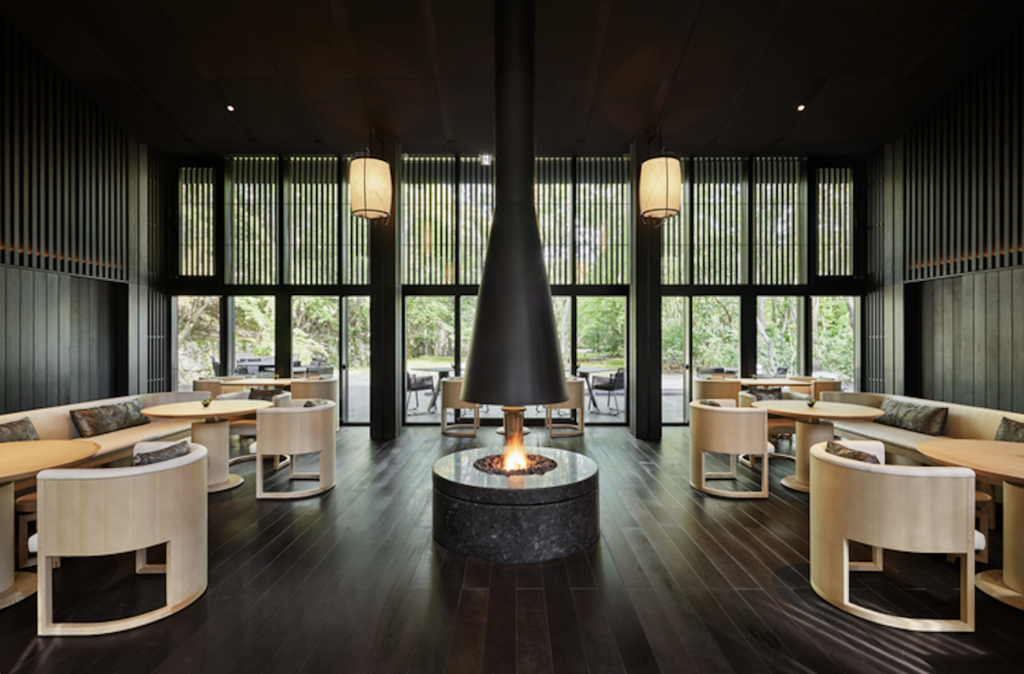
Two terms define much of Japan’s fine dining culture, and understanding the difference between them changes how a meal should be approached.
Omakase, meaning roughly I leave it to you, refers to a meal where the chef selects each course, typically at a sushi or kappo counter, moving through a sequence of dishes chosen based on the day’s ingredients rather than a fixed menu. A typical Tokyo omakase can run through fifteen to twenty courses over two hours or more, paced entirely by the chef rather than the diner. Ordering off-menu or requesting substitutions, common practice in many countries, runs against the spirit of the format itself.
Kaiseki is a related but distinct tradition, a multi-course meal built around the season, often served in a ryokan or a dedicated kaiseki restaurant rather than at a counter. Where omakase is centered on the chef’s individual judgment in the moment, kaiseki follows a more structured progression, moving through specific categories of dishes, each chosen to reflect the time of year and often served with attention to how the meal is presented as much as how it tastes.
Both traditions share an underlying philosophy: the diner is participating in something composed in advance, not customizing a meal to personal preference. Understanding this distinction before sitting down changes the entire posture a guest brings to the table.
This also shapes how a meal should be paced from the diner’s side. At a sushi counter in particular, each piece is typically formed and served individually, often meant to be eaten within moments, while the rice is still at the temperature the chef intended. Letting several pieces accumulate on the plate while photographing or talking changes the dish by the time it’s eaten, which is part of why experienced diners tend to eat close to the pace the chef sets rather than treating the counter like a buffet to work through at their own speed.
Regional Differences Worth Knowing
While Tokyo holds the largest concentration of Michelin-starred restaurants in the world, the dining culture shifts noticeably outside the capital. Kyoto’s kaiseki tradition, shaped by centuries of temple cuisine and tea ceremony culture, tends to favor a quieter, more restrained presentation than Tokyo’s often bolder, ingredient-forward style. Osaka, historically a merchant city built on trade, has a reputation for heartier, more direct flavors, and a slightly more relaxed dining atmosphere overall, reflected in its own local saying about eating until one goes broke.
A private journey that includes fine dining across more than one city tends to benefit from this contrast, treating each region’s table as a different expression of the same underlying philosophy rather than expecting a uniform experience everywhere. A traveler who assumes Kyoto’s kaiseki will feel like Tokyo’s sushi counters, simply because both fall under the umbrella of Japanese fine dining, often finds the two experiences have very little in common beyond their shared attention to seasonality and craft. Fukuoka, in the south, adds a further contrast still, known for a more casual, seafood-driven food culture built around yatai, small open-air food stalls, a very different register entirely from a formal kaiseki room, but no less considered in its own right.
Why Private Access Matters More in Dining Than Almost Anywhere Else
Given how many of Japan’s best restaurants operate on introduction-only access, a private travel advisor’s relationships often matter more here than in nearly any other part of a bespoke Japan journey. Booking a well-known restaurant independently, particularly one without English-language reservation systems, can be difficult even months in advance, and some of the most respected counters are never open to public booking at all.
A private advisor with established relationships across a city’s dining scene can secure seats at restaurants that would otherwise be unreachable, and can also guide a traveler toward the right restaurant for a specific evening rather than simply the most famous one. A quiet six-seat counter suits a couple looking for intimacy in a very different way than a larger kaiseki room suits a family celebration, and matching the right room to the right moment is as much a part of the planning as the reservation itself. This same principle shapes how we approach private celebrations more broadly, where dining is often the single evening a milestone is actually marked.
Dietary Considerations and Advance Planning
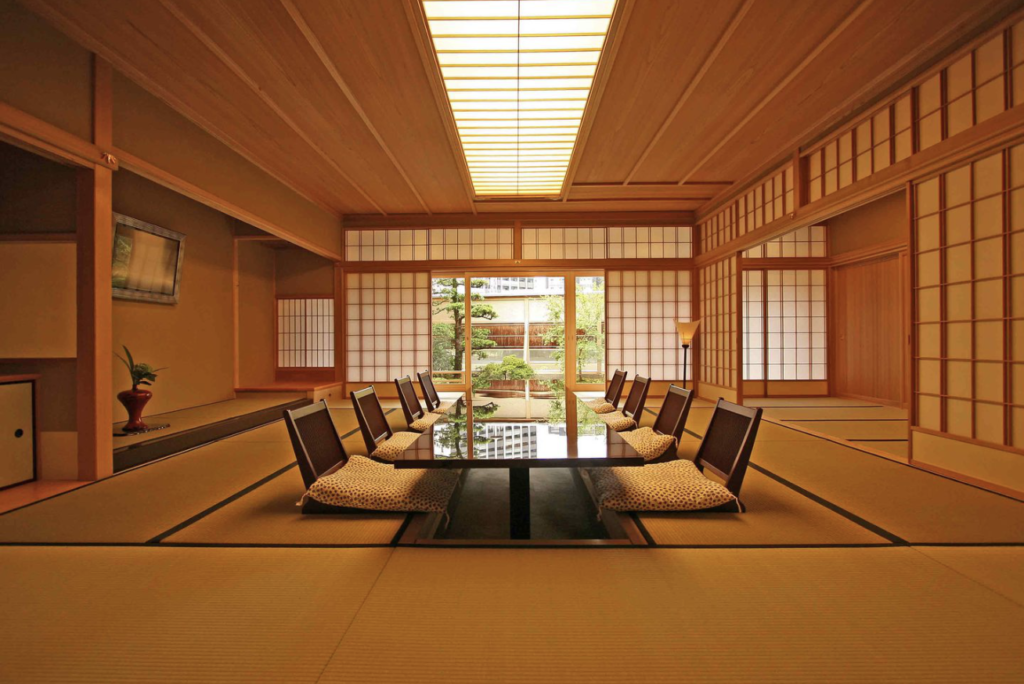
Fine dining in Japan, particularly at sushi and kaiseki counters, is built around a fixed sequence of dishes chosen by the chef, which can make dietary adjustments considerably more complicated than at a conventional restaurant. Requests such as halal preparation, which matters for many Muslim travelers, including those from the GCC, need to be raised well before the meal, ideally at the time of booking, since a chef planning a multi-course omakase around the day’s ingredients has little room to adjust once the meal has begun.
Some restaurants are willing to accommodate specific dietary needs with enough notice, substituting or omitting particular ingredients while preserving the overall structure of the meal. Others are not equipped to do so at all, particularly smaller, single-chef counters with limited kitchen flexibility. Knowing this in advance, and choosing restaurants accordingly, prevents the kind of last-minute disappointment that can otherwise derail an evening that took months to arrange.
This distinction matters more in Japan than in many other fine dining cultures, largely because of how central a fixed, chef-driven sequence is to the format itself. A Western tasting menu often has parallel vegetarian or allergen-free versions built in from the start. A traditional omakase counter, by contrast, may have been planned around a single delivery of fish that morning, with little built-in flexibility for substitution once the sequence has begun. This is not a limitation so much as a reflection of how the format works: the chef’s judgment on the day’s ingredients is the entire premise of the meal, which is precisely why any dietary requirement needs to be part of the conversation before a reservation is confirmed, not raised once seated at the counter.
What This Looks Like With Asatsuyu
Dining is one of the few parts of a Japan itinerary where who you know genuinely changes what’s possible, more than money or timing alone. Several of Tokyo’s and Kyoto’s best-regarded counters simply aren’t reachable through any public channel, and the relationships that get a table there are built over years, not requested overnight.
This is why we treat restaurant planning as its own conversation within a bespoke journey design, separate from choosing hotels or regions. It starts the same way our private consultation process always does: understanding what the evening is actually for, whether that’s a quiet counter for two, a milestone worth marking with a private celebration, or a dinner that pairs naturally with a day spent among Japan’s art and architecture. We ask about dietary needs early and confirm them directly with the kitchen rather than assuming a restaurant can accommodate them on the night.
A meal at the right counter, arranged the right way, is rarely just dinner. It’s often the clearest single evening of what working with a private Japan travel advisor actually looks like — not a reservation made, but a room chosen with real thought for who’s sitting in it, and for what the evening is actually meant to mark.