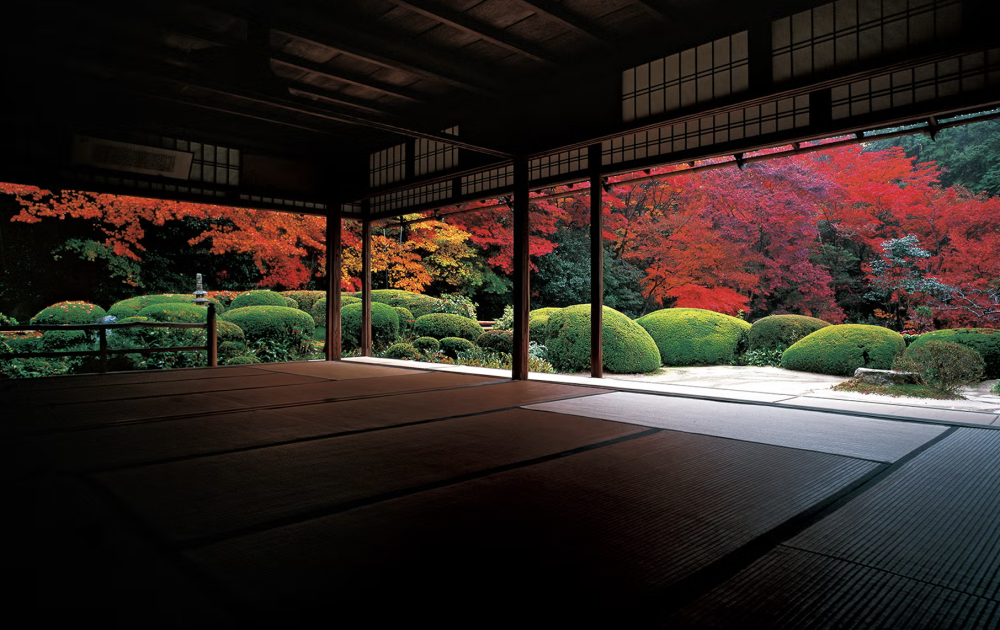
Autumn in Japan is a season defined by atmosphere rather than activity. Across the country, landscapes shift into deep tones of red, amber, and gold, creating one of the most visually refined seasonal transitions in the world.
For many travelers, autumn is considered the most meaningful time to experience Japan. It is a season where nature, culture, and timing align with exceptional clarity. Each region expresses autumn differently, offering distinct moods rather than a single unified scene.
A private journey through Japan in autumn is not about covering distance. It is about moving through carefully selected landscapes where timing, privacy, and environment shape the experience.
Understanding Koyo: Japan’s Autumn Color Season
In Japan, the changing of the leaves has its own name: koyo. The word describes the broader autumn color season, while momiji refers more specifically to the maple leaves themselves, and to the long tradition of momijigari, or leaf hunting, where visiting the colors is treated as its own kind of journey rather than a backdrop to something else.
Koyo does not arrive everywhere at once. It begins in the north, in the high elevations of Hokkaido’s Daisetsuzan National Park, often as early as mid-September. From there, the color moves south and downward in elevation over roughly two and a half months, reaching the Tohoku region by mid-October, and arriving in Tokyo and Kyoto only in mid-to-late November. By the time the season reaches southern Kyushu, it can be mid-December.
This slow movement is part of what makes an autumn journey through Japan so different from a single-destination trip. A well-timed private journey can follow the color south, spending a few days in the mountains while the leaves are at their peak, then arriving in Kyoto or Tokyo weeks later, just as the season reaches its height there, too.
Kyoto: Where Autumn Meets Centuries of Design
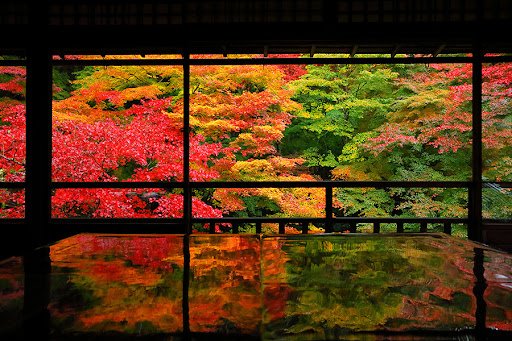
Kyoto’s relationship with autumn runs as deep as its relationship with cherry blossom season, though the mood could not be more different. Where spring in Kyoto feels light and fleeting, autumn feels weighted and deliberate, with the deep reds of maple leaves set against temple walls that have stood for centuries.
The city’s koyo season typically peaks between mid and late November, with some recent years pushing the peak into the final days of the month. Tofuku-ji, one of Kyoto’s largest Zen temples, is known for a valley of maples viewed from a wooden bridge that spans directly over the color below. Eikan-do, a temple in the eastern hills, is particularly known for evening illuminations that light the maples after dark. The bamboo grove and riverside paths of Arashiyama, on the city’s western edge, take on an entirely different character in autumn, with maples mixed among the bamboo rather than cherry blossoms overhead.
Because the koyo season in Kyoto draws demand nearly as high as cherry blossom season, accommodation in the city during this period is often booked three months or more in advance. A private journey through Kyoto in autumn depends on this kind of early planning even more than most other times of year.
Beyond the well-known sites, Kyoto’s smaller temples and residential districts hold their own quieter version of the season. A private itinerary can include time in these less-visited corners of the city, where a single maple tree against a stone wall can feel just as considered as a famous valley of color, simply because there is space to actually look at it.
Tokyo and the Gardens Within the City
Tokyo’s autumn is a quieter story, but no less considered. Gardens such as Shinjuku Gyoen and Rikugien, both landscaped decades or centuries ago with the changing seasons in mind, reach their own koyo peak in mid-November, offering a version of the season that exists within walking distance of some of the city’s busiest districts.
What makes Tokyo’s autumn worth including in a private journey is this contrast: a morning spent in a centuries-old garden, followed by an afternoon back in the pace of a modern city. Few places in the world hold this range so close together.
The North: Where the Season Begins
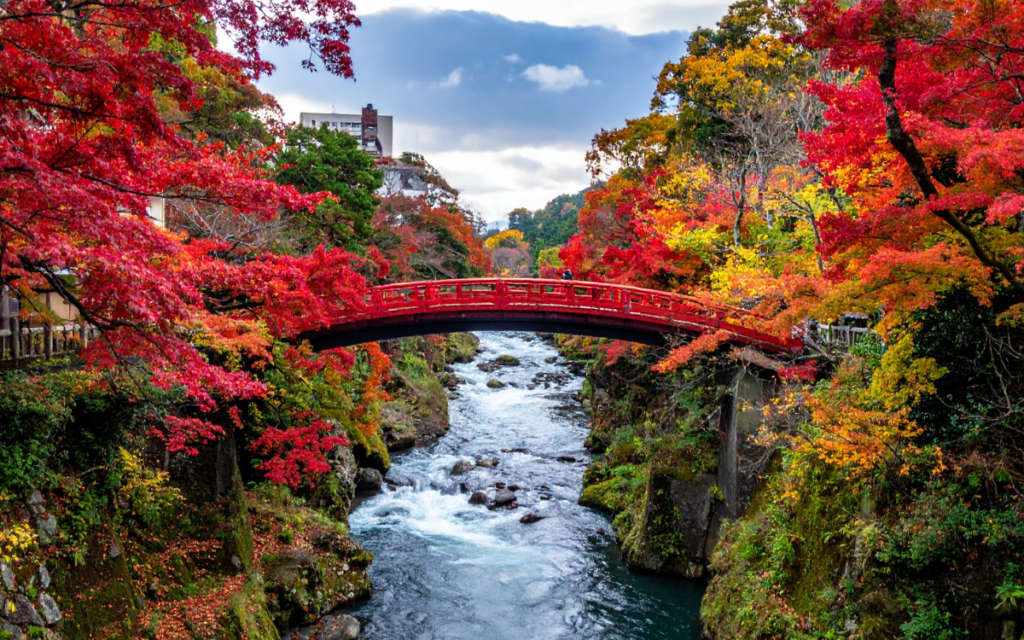
For travelers who want to experience koyo at its most dramatic, the northern regions offer something Kyoto and Tokyo cannot: true wilderness set against the color. In Hokkaido’s Daisetsuzan National Park, the season begins as early as mid-September at higher elevations, with volcanic terrain meeting a sea of turning leaves. Further south, in Tohoku and around Nikko, the color arrives through October, often against a backdrop of shrines, gorges, and mountain scenery with far fewer visitors than Kyoto sees during its own peak.
A private journey that begins in the north and moves south mirrors the season’s own natural movement. It also tends to feel less rushed, since the crowds that gather in Kyoto during peak koyo season have not yet arrived in the regions further north weeks earlier.
Nikko, a few hours north of Tokyo, offers a useful middle point between these two extremes. Its shrines and gorges typically reach peak color in mid-to-late October, weeks ahead of Kyoto, making it a natural stop for a journey moving south through the season rather than jumping straight from Hokkaido to the capital.
Why Autumn Rewards Careful, Private Planning
Autumn’s biggest planning challenge is also what makes it worth planning around carefully: the season moves, and it does not move on a fixed calendar. Peak color in any single location typically lasts only one to two weeks, sometimes less if an early frost or a windstorm arrives. A trip booked too early or too late can miss the color entirely, even in a well-known location.
A private journey through Japan in autumn accounts for this by building in flexibility rather than fixing every date months in advance. Regions are chosen with a general window in mind, and the exact pace can shift slightly as the season’s progress becomes clearer closer to the trip. This kind of adjustment is difficult to make within a fixed group tour, but it comes naturally to a journey designed specifically around the traveler taking it.
Accommodation adds another layer to this planning. The best-located ryokan and hotels near Kyoto’s most famous koyo spots are often reserved months ahead, particularly for the narrow window in late November when the city’s color is at its peak. Waiting until the season is visibly underway to book a stay in Kyoto during this period often means settling for a property far from where the color actually is.
Designing the Journey Around Mood, Not a Checklist
Much like cherry blossom season, autumn in Japan is better experienced through fewer, well-chosen locations than through an attempt to see every famous koyo spot in a single trip. A morning spent quietly at Eikan-do before the crowds arrive, or an unhurried afternoon walking beneath maples in a quiet corner of Arashiyama, tends to leave a stronger impression than a day spent moving quickly between several well-known sites.
Family groups often benefit from this same principle. Older travelers may prefer a slower pace with shorter distances between stops, while younger members of a group may want more time outdoors in the mountain regions further north. A well-designed private journey builds this variation into the trip naturally, rather than keeping everyone on a single fixed schedule.
Muslim travelers, including those from the GCC, often plan around specific needs such as halal dining and set prayer times. During autumn, when many of the best experiences happen in smaller towns and temple districts rather than major cities, having these details confirmed in advance matters even more, since options can be harder to find without planning once already in a smaller region.
What a Private Autumn Journey Through Japan Actually Looks Like
A well-designed private journey through Japan in autumn might begin in the north, spending a few days in Hokkaido or Tohoku while the color is at its earliest peak, before moving south toward Tokyo as the season follows. From there, the journey continues to Kyoto, timed to arrive as the city’s own koyo season reaches its height in mid-to-late November.
Each stop is chosen not simply because it is well known, but because the timing works, and because the pace allows enough time to actually experience the place rather than pass through it. A private guide familiar with a specific temple garden or mountain trail can also explain the history and design behind what’s being seen, turning a scenic walk into something with real depth.
This is the core difference between visiting Japan during autumn and experiencing its koyo season properly: the second requires timing, patience, and a route built specifically around where the color actually is, week by week, rather than a fixed itinerary set months in advance and left unchanged.
What This Looks Like With Asatsuyu
Autumn is the one season where our planning starts before the trip does, and keeps going after. Bloom forecasts for koyo shift as the weeks get closer, sometimes by a week or more in either direction, so a route we sketch out in the spring isn’t the route we confirm in September. We stay with the forecast as it firms up, and we’re willing to move a client’s dates or reorder a region if that’s what the color actually calls for.
This only works because we’re not managing dozens of trips at once during the same narrow window. A handful of autumn journeys each year means we can watch Kyoto’s forecast the same week we’re confirming a ryokan in Tohoku, and adjust either without scrambling. If autumn is the season you’re drawn to, the earlier that conversation starts, ideally months before the leaves turn, the more of the season is still available to plan around.
Autumn in Japan rewards travelers who move slowly and plan carefully. A private journey through its most iconic landscapes is, above all, an exercise in good timing, knowing not just where the color will be, but when, and building a route that meets it there.