
Private Art & Architecture Journeys in Japan: Bespoke Luxury Experiences for Discerning Travelers
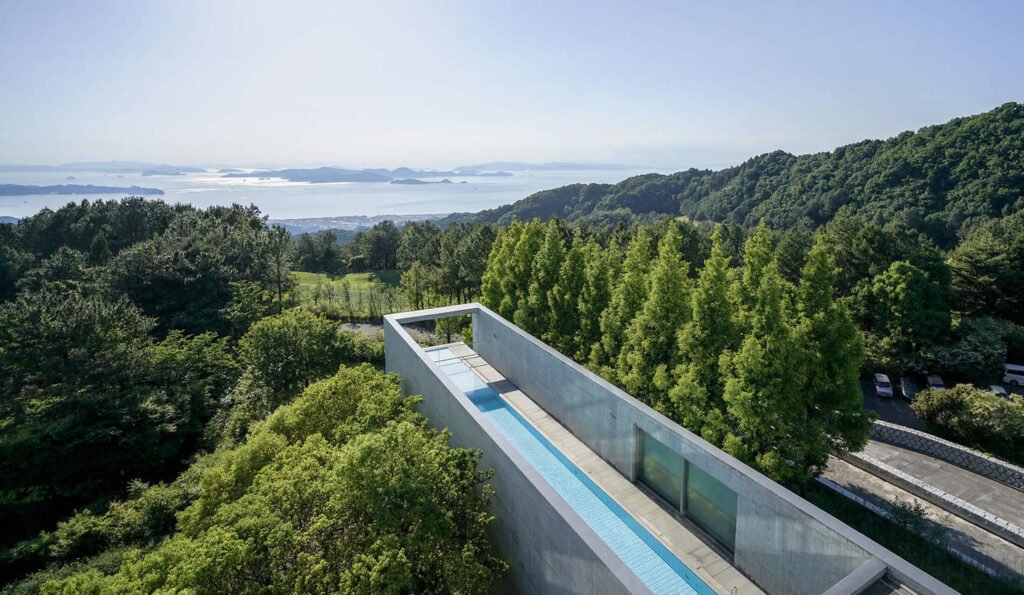
Japan has one of the most distinctive relationships among architecture, craft, and landscape in the world. A single week can move from a concrete museum buried into a hillside, to a garden designed centuries before the concept of minimalism existed, to a temple built entirely without nails, each shaped by the same underlying instinct toward restraint and precision. A private art and architecture tour in Japan is built around this range rather than around a single city or era. Instead of grouping temples into one day and museums into another, a bespoke architecture journey is designed to move between them, letting each site inform how the next one is seen the foundation of what a genuinely curated art experience in Japan looks like. Where Modern and Traditional Architecture Meet Few architects have shaped Japan’s contemporary landscape as distinctly as Tadao Ando. Born in Osaka in 1941 and entirely self-taught, Ando built a body of work defined by unadorned concrete, careful framing of light, and a refusal to let a building dominate its surroundings. The Church of Light, completed in Osaka in 1989, remains one of his most quietly powerful spaces, a single cross cut directly into a concrete wall, admitting the only light in an otherwise dark interior. His most complete architectural statement, however, sits far from any city. On Naoshima, a small island in the Seto Inland Sea reachable only by ferry and roughly five hours from Tokyo, the Chichu Art Museum is built almost entirely underground. Visitors descend through a narrow, sky-open concrete corridor before reaching galleries holding a small, deliberately limited collection of works by Claude Monet, James Turrell, and Walter De Maria, each installed to work with the architecture rather than simply sit inside it. Nearby, the Benesse House Museum, completed in 1992, was Ando’s first structure on the island and combines a contemporary art museum with a small hotel, allowing a stay within the same building that houses the collection. A private architecture tour in Japan built around Ando’s work tends to include both Naoshima and Osaka, connecting his most contemplative building with his most emotionally direct one, a useful way to understand a single architect’s range across three decades of contemporary Japanese architecture. Kyoto’s Older Architectural Language Where Ando’s work speaks through concrete and light, Kyoto’s temples and gardens speak through wood, stone, and centuries of accumulated intention. A private architecture tour in Kyoto built around its Zen temples reveals principles that predate modernism by hundreds of years yet arrive at strikingly similar conclusions: space treated as deliberately as filled space, natural materials left largely unaltered, and a structure’s relationship to its garden considered as carefully as the structure itself. Ryoan-ji, a UNESCO World Heritage Site in northwest Kyoto, remains the clearest expression of this philosophy. Its dry rock garden, believed to date from around 1500, arranges fifteen stones into five groups across a rectangle of raked white gravel and positions them so that only fourteen are ever visible from any single point along the veranda. One stone always remains hidden, regardless of where a visitor sits. Whether this was intentional or simply the result of the garden’s design, the effect has drawn contemplation for over five centuries, and the same restraint later became a recognizable thread in modern minimalist architecture, including much of Ando’s own concrete work. A private Zen temple tour in Kyoto is most effective when it moves slowly through a small number of these sites, Ryoan-ji among them rather than attempting to see every well-known temple in a single day. A quiet hour in front of the rock garden, viewed without a tour group passing through, communicates considerably more about the philosophy behind the design than a rushed visit to several temples in succession. Traditional ryokan architecture belongs to this same lineage. A well-chosen luxury ryokan stay during a curated art and architecture journey is not incidental to the trip the building itself, its garden, and its relationship to natural light are as much a part of the experience as any museum visited during the day. Building the Itinerary Around Rhythm, Not a Checklist A curated art experience in Japan works best when the itinerary is shaped by rhythm rather than by a list of must-see sites. Naoshima’s museums are deliberately spread across the island rather than concentrated in one building, encouraging a full day of movement between them. Kyoto’s temples are similarly scattered across the city, often separated by quiet residential streets rather than tourist thoroughfares. A well-designed journey accounts for this pacing directly building in unhurried time at each site rather than treating travel between them as a formality to move through quickly. For a family traveling together, this often means shorter days with fewer stops, allowing older members of the group to move at a comfortable pace and younger travelers room to engage with a space rather than simply pass through it. For Muslim travelers, this same unhurried structure makes it straightforward to build prayer times naturally into the day, and to confirm halal dining options in advance around each stop on the itinerary, rather than searching for options once already on site. Private Access Changes What’s Possible Several of Japan’s most significant architectural and artistic sites limit visitor numbers by design; the Chichu Art Museum admits a set number of visitors per time slot, and many of Kyoto’s smaller temple gardens were never built to accommodate large groups. A private arrangement does not change what these places are, but it changes how they can be experienced an early entry before general visitors arrive, a guide with genuine expertise in a specific architect’s work rather than a general overview, or an appointment at a temple garden not typically open without one. This kind of access tends to matter most at the sites that reward stillness a museum built around a single quiet installation, or a garden designed to be looked at rather than walked through. Removing the presence of a crowd from these spaces changes the